A Literary Press in New York City
r e c e n t l y r e l e a s e d :
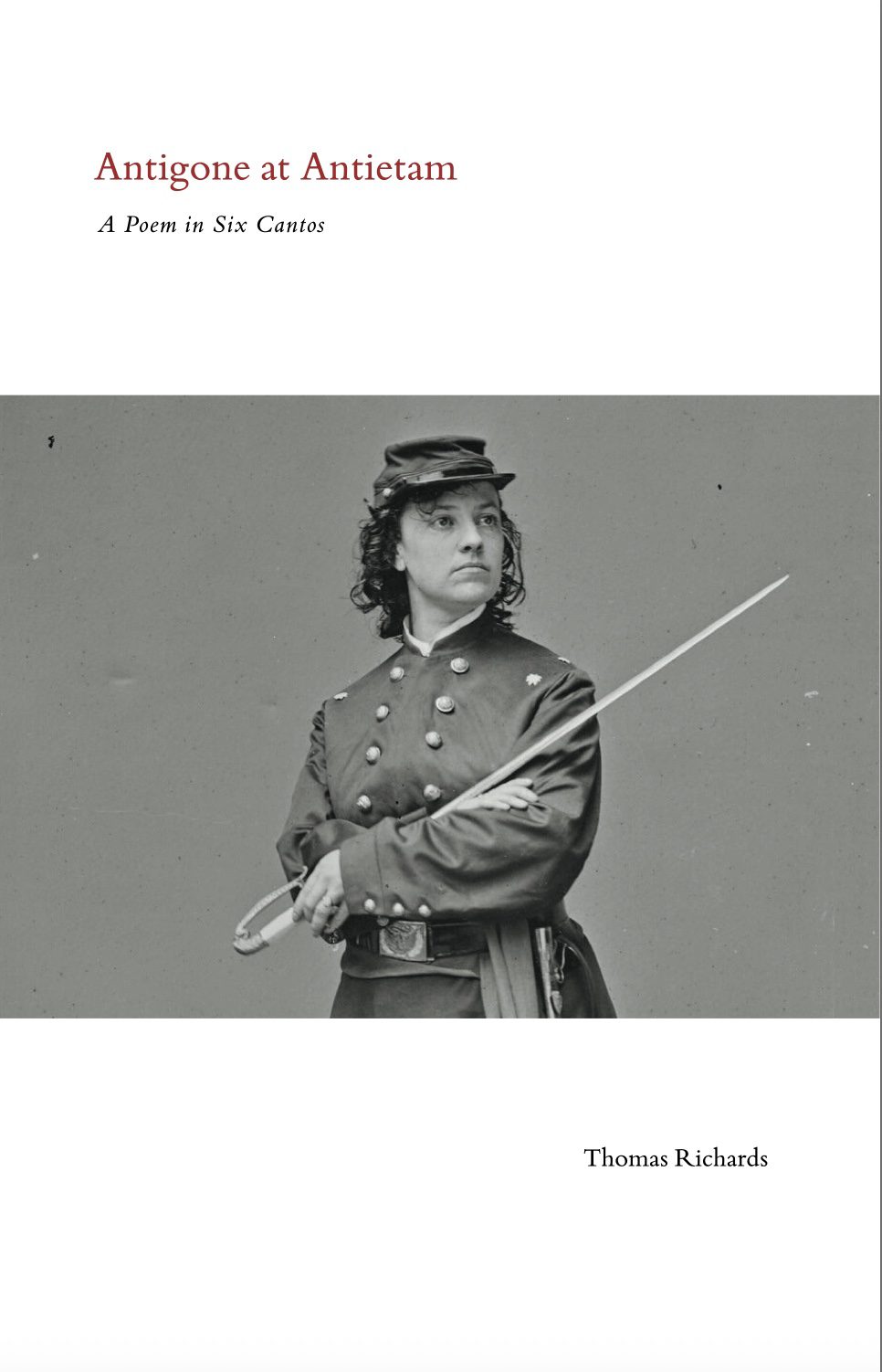
Antigone at Antietam A Poem in Six Cantos Thomas Richards
“And I myself will bury him.”
The story of Antigone is a story of two brothers, dead on opposite sides of a civil war in ancient Greece. King Creon forbids the burial of the rebel brother, on pain of death. Their sister goes against the king, and buries him with rites and libations. She is sentenced to death.
Here the Antigone of Sophocles becomes a story of the American Civil War. Loudoun County in northern Virginia is torn between blue and gray. In the King family, Gus enlists with the Potomac Brigade, while his brother Price crosses the lines to join the Blue Mountain Boys.
Both are killed. Gus at Ball’s Bluff in 1861, and Price, a year later, at Manassas. Gus is given a hero’s funeral. Price’s father, Credence King, a Colonel in the Union army and an adjutant to Meade, wants his body, when found, to be thrown to the birds and dogs.
Cree has two daughters. One, Isa, is timid and fearful. And the other, Anne, crosses the lines of battle, finds her brother’s body, brings him home for burial, and suffers the fate of Antigone.

Pretty Peggy-O Thomas Richards
A group of college friends gathers for a Confirmation at the St. Paul Cathedral. But something happened among them, years ago, back at college, something each of them remembers differently, and a dead girl haunts their memories and colors the celebration.
A girl named Peggy Gyllensen killed herself back in 1977 when they were in college in Northfield. None of them were there when she did, but they all had a hand in it, and her mother appears at the celebration like a ghost.
Pretty Peggy-O shows the coming together of old friends at a reunion gone wrong. Everything they once were comes back to them, and their lives, seemingly so stable in middle age, become for a moment radically uncertain in the shadow of the dead girl.
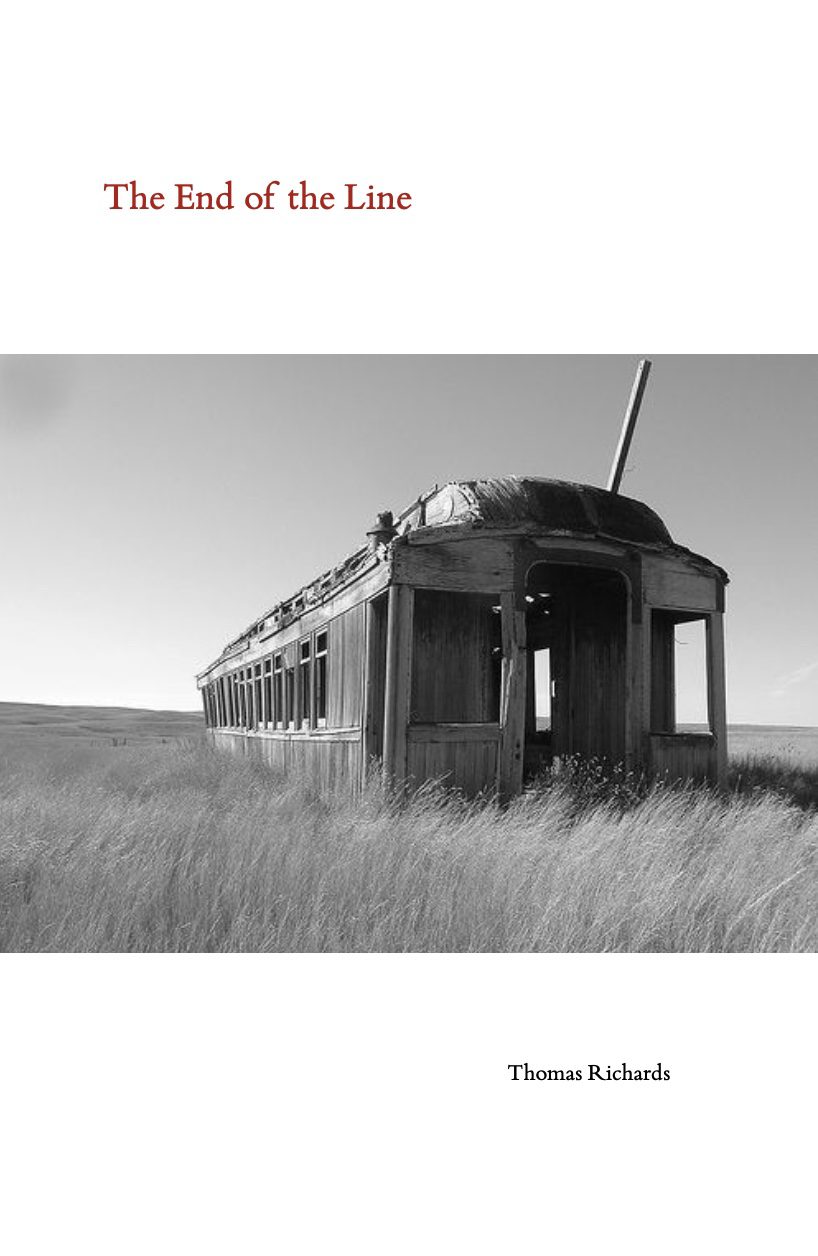
The End of the Line Thomas Richards
“It was his life, and he couldn’t imagine it without the railroad.”
1941. Railroads are no longer being built in the United States. Lines are being abandoned everywhere. But the President of the Soo Line railroad wants his son to learn how to build one from the ground up—so he sends him to the Philippines to build the Manila & Lingayen Railroad.
Then the Japanese invade. Will Van Severen and the childhood friend his father sent to look after him, Stuart Hearn, are driven into the Bataan Peninsula, where they are trapped with the rest of the Americans. The Japanese army is closing in.
The End of the Line is the story of two childhood friends, both raised on the railroad, both in love with the same woman, facing war and defeat, as well as of the reality of the American railroad in its decline.
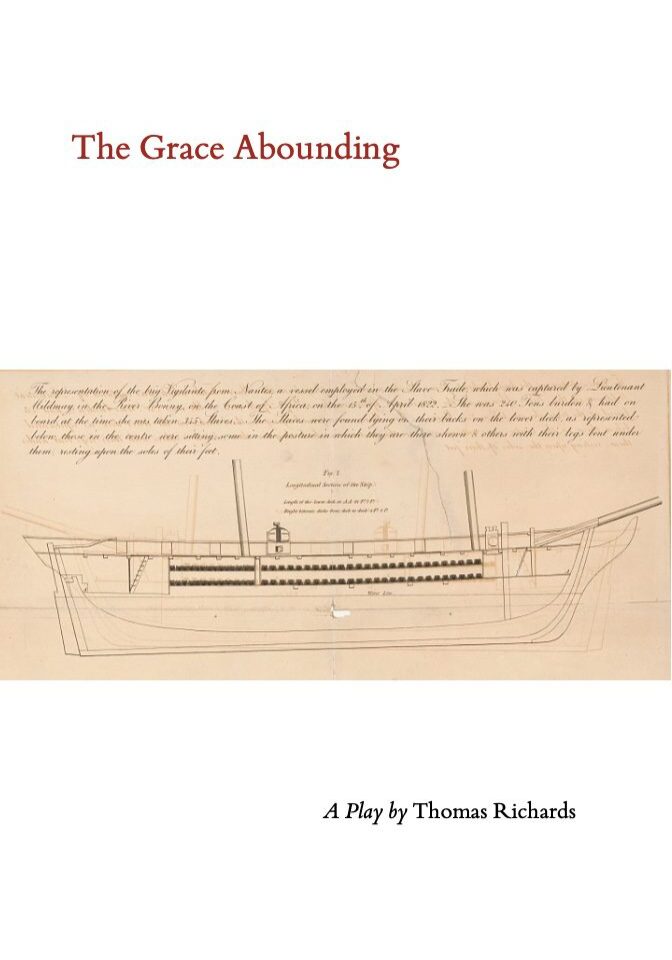
The Grace Abounding A Play by Thomas Richards
“Imagine, sir, being born into a world in which nearly every thing you see around you is morally wanting.”
It is 1722. David Wellbery, a Puritan ship captain who works for the Royal African Company, has just been told he must take command of a slave ship, the Avery. He takes the commission, but his conscience weighs on him, and he frees the Africans on board in a mutiny against the Company. Then, with ship and crew, he roams the Atlantic coast, freeing slaves in transit from Africa to Colonial America. He renames the ship “The Grace Abounding,” after John Bunyan’s spiritual classic.
So the pirates in this play are actually liberators. The British and the Spanish join in league to hunt him down as he makes his way north along the Atlantic coast. Working with a ship redesigned by his master engineer, Augustine Kincaid, a slave whose former master had trained him in architecture and engineering, they evade capture and free many enslaved Africans by using his own intelligence to overcome the odds.
The play has another point of location in American history. David Wellbery is in love with the daughter of Cotton Mather, the judge of the famous witch trials of 1692. In the last act, The Grace Abounding makes its way to Boston, where Wellbery and his crew are put on trial. The judge is Cotton Mather himself, who now, in old age, is haunted by what he has done. Wellbery and Kincaid and his crew plead their case, and Mather delivers a final judgment.
Books from The Wheat Line Press are available from: